
Back to School: Why College Campuses Are the Next Great Place to Live
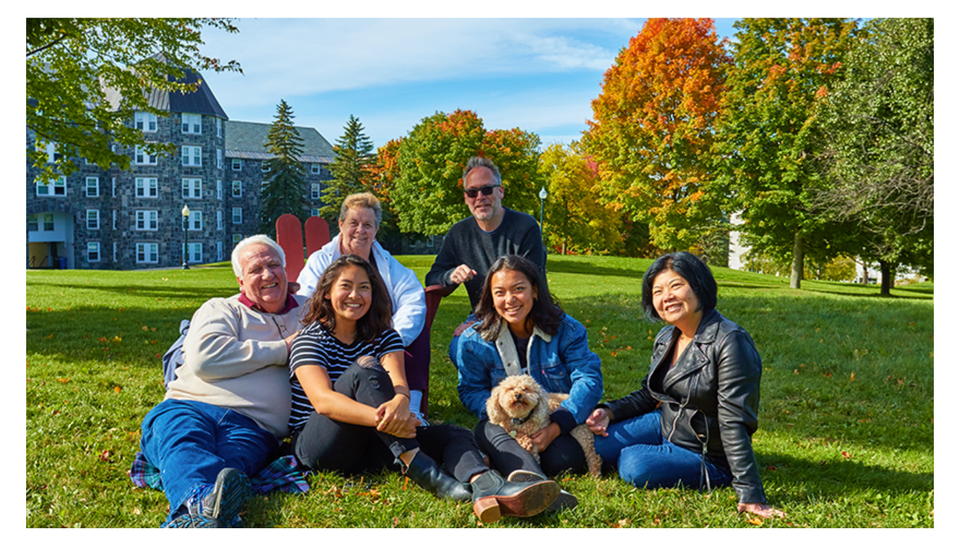
The future of housing meets the future of higher education
We are living through an unprecedented moment of reinvention for American colleges and universities. In fact, for many schools, it’s an adapt-or-die moment.
For much of its history, college was an elite institution, largely reserved for white men. Its purpose was not career preparation, but rather the formation of thoughtful, engaged citizens. In that sense, the college campus became one of America’s most successful (if woefully exclusive) social designs: a village-like environment organized around learning, culture, and shared responsibility, where physical design and community design worked together to forge society’s future leaders.
After WWII, access expanded dramatically, and college became a gateway to the middle class. But over the last several decades, the business model has come under strain. Due to declining birthrates, there are simply fewer traditional college-age students. The number of U.S. high school graduates is projected to decline by 13% over the next 15 years, with sharper drops in the Northeast and Midwest. At the same time, institutions built for broad knowledge and character formation struggled to adapt to a world that increasingly demanded clear pathways to employment. Rising tuition, mounting student debt, and the growth of lower-cost online and alternative education options have since pushed many families to question the residential college experience altogether. The result is a well-documented “enrollment cliff,” driving an alarming wave of campus closures—averaging roughly one college per week in recent years—and leaving many more in dire financial straits.
Yet the campuses themselves remain extraordinary assets. They combine walkability, attractive architecture, green space, and diverse “third spaces”—libraries, theaters, dining halls—into environments built for community, not just coursework. That design presents a rare opportunity. At a moment when American society is struggling with housing, loneliness, and caregiving, colleges have the chance to extend their original civic mission while simultaneously securing their future.
A real estate thesis, hiding in plain sight
The United States has a massive housing shortage–over 4.7 million homes–and the deficit is most severe in the employment and cultural hubs where people most want to live (Los Angeles, San Francisco, New York City, Boston, etc.). Meanwhile, colleges and universities own thousands of acres of underutilized land in and around these cities, making them compelling locations for housing development.
The U.S. has roughly 4,000 colleges, and for all the reasons described above, an increasing number are looking to monetize their real estate through innovative housing and mixed-use partnerships. We have spoken with dozens of enterprising college presidents who cite revenue diversification as a major strategic initiative. This convergence—a housing crisis and a revenue crisis—presents a massive opportunity.
Our approach is to transform underutilized land and vacant buildings into vibrant, mixed-income communities that generate revenue for institutions while offering an incredible quality of life for families. Colleges get new, durable income in the form of ground lease and shared service payments. Residents of all ages enjoy campus amenities, educational offerings, and intergenerational connection. Bringing the generations back together is both the future of housing and the future of higher education.
In retrospect, college campuses are an obvious fit for community-centered development. Our earliest explorations focused on privately held (often rural) land, but weak housing demand, limited transit access, and/or the absence of existing infrastructure proved difficult to overcome. We then considered acquiring closed campuses, but diligence revealed recurring challenges—debt, deferred maintenance, regulatory complexity, and subpar locations—that often explained their closure in the first place.
Around the same time, we encountered the university retirement community (URC) model, in which colleges partner with senior living operators to offer residents—typically age 55 and older—access to campus amenities such as classes, libraries, dining halls, and athletic facilities. With more than 80 such communities operating nationwide, the model has delivered strong outcomes for both residents and institutions and offers a well-established precedent attractive to investors. But the most compelling examples go further than access alone.
University-integrated living
One of the earliest and most influential URCs is Lasell Village, an independent senior living community affiliated with Lasell University in Newton, Massachusetts. Now identifying as a university-integrated community (UIC) under the leadership of Rekindle advisor Zehra Abid-Wood, Lasell distinguishes itself through an unusually deep level of engagement with campus life. Unlike at most URCs, residents are required to engage in a structured lifelong learning program—typically around 450 hours per year of courses, lectures, or other educational activities—making education not an amenity, but a condition of belonging.
Mirabella at Arizona State University is widely recognized as one of the most highly integrated university-based retirement communities in the U.S. Sold out during construction and opened in 2020, its 20-story building sits directly on ASU’s Tempe campus. Residents not only attend classes, lectures, and performances, but also serve as mentors, teaching assistants, and informal advisors to students and faculty. In a recent New York Times profile, one resident described the opportunity to interact with young people as a major reason she and her husband chose Mirabella over a traditional retirement community—and paid $100,000 more.
The Pillars of Prospect Park near the University of Minnesota offers an early model of true intergenerational living, combining senior housing with 10 student apartments and on-site childcare. The senior residents have access to campus amenities, cultural programming, and lifelong learning, and they interact with the college students and children through daily proximity as well as intentional programming. The result is a highly occupied, financially successful development that demonstrates how layering age groups and uses can strengthen social life and create durable value. In September 2025, The Pillars sold to Ventas, Inc. (a REIT) for $140 million—providing a clear proof point for the category.
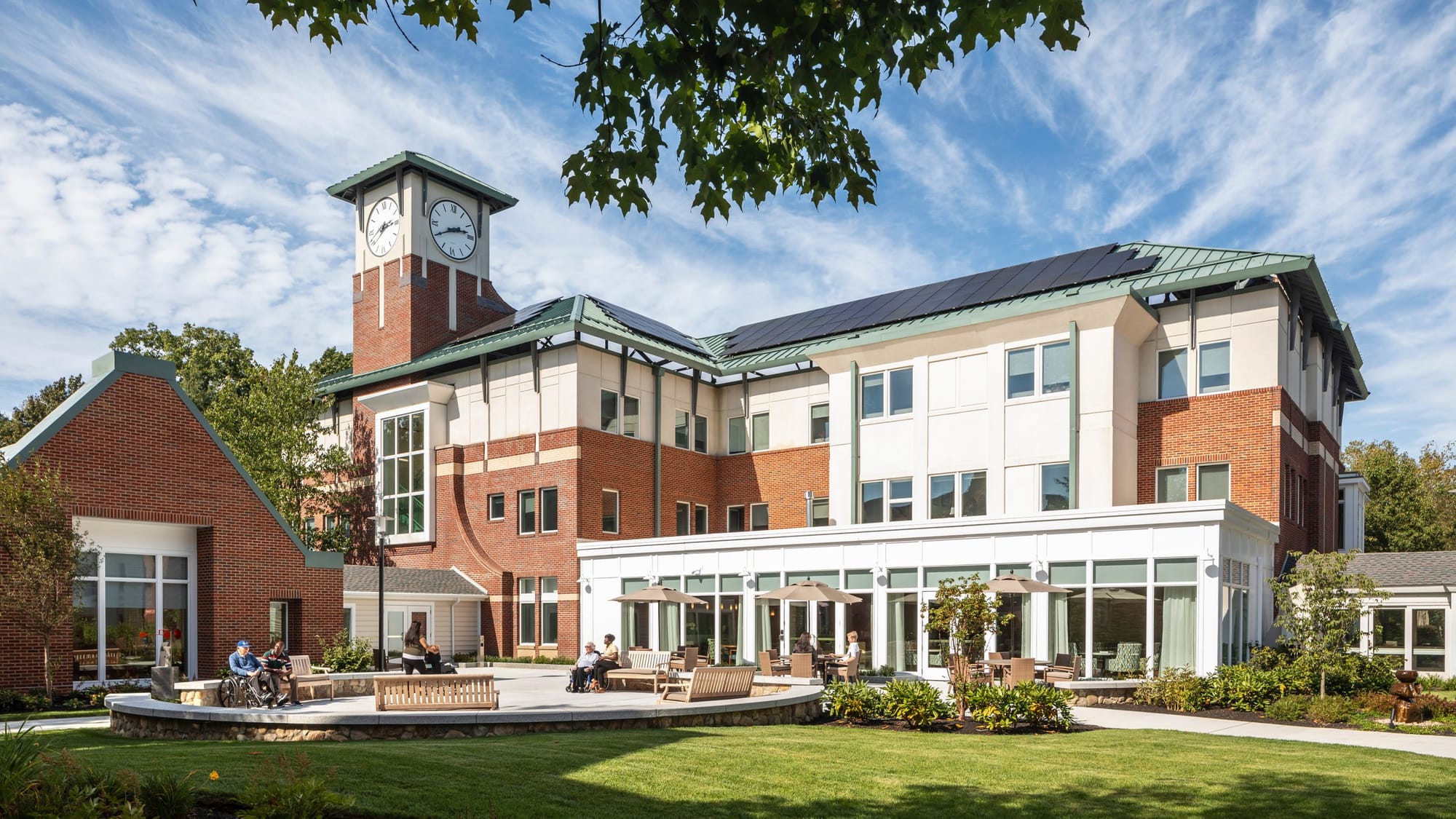
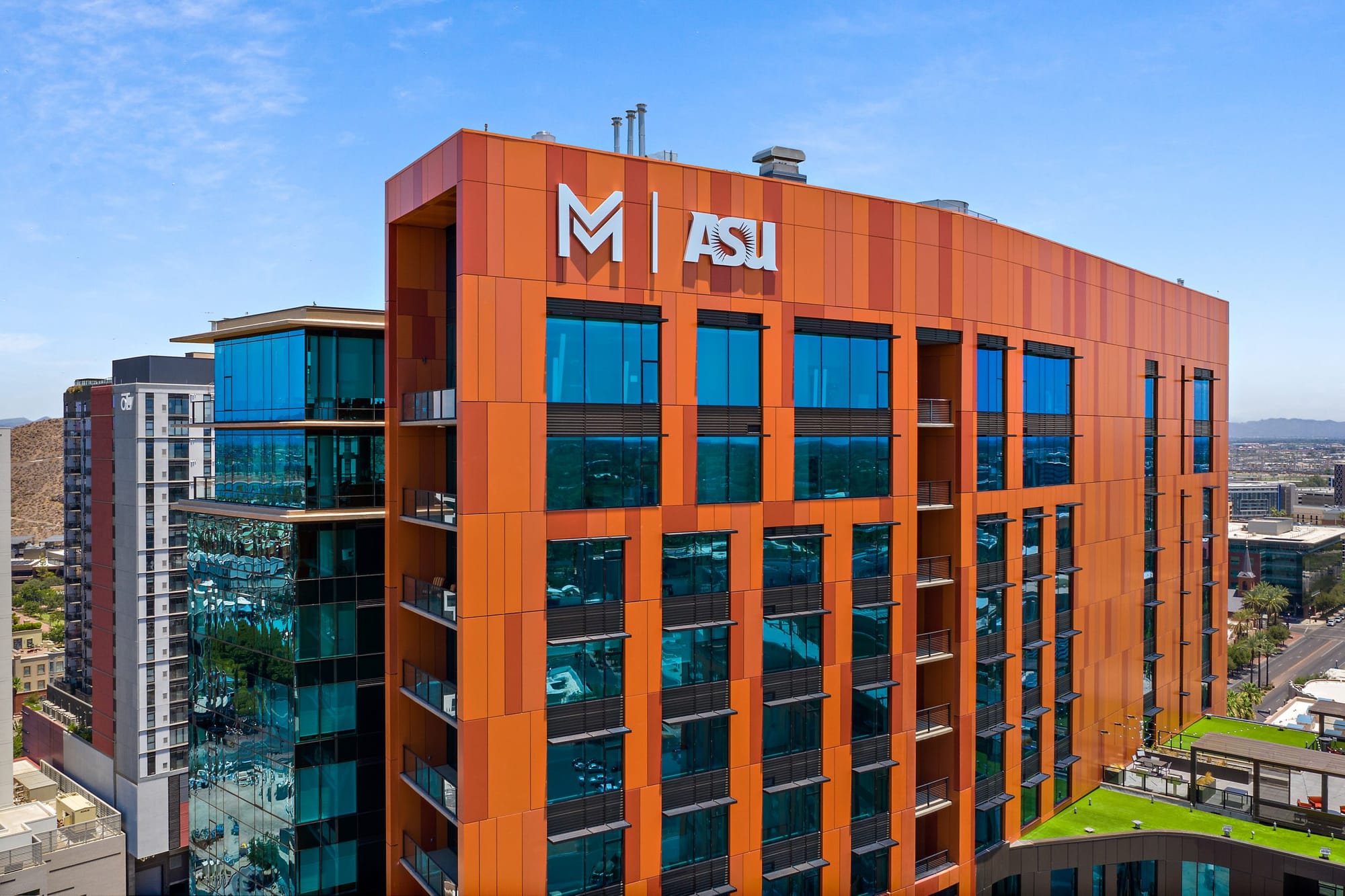
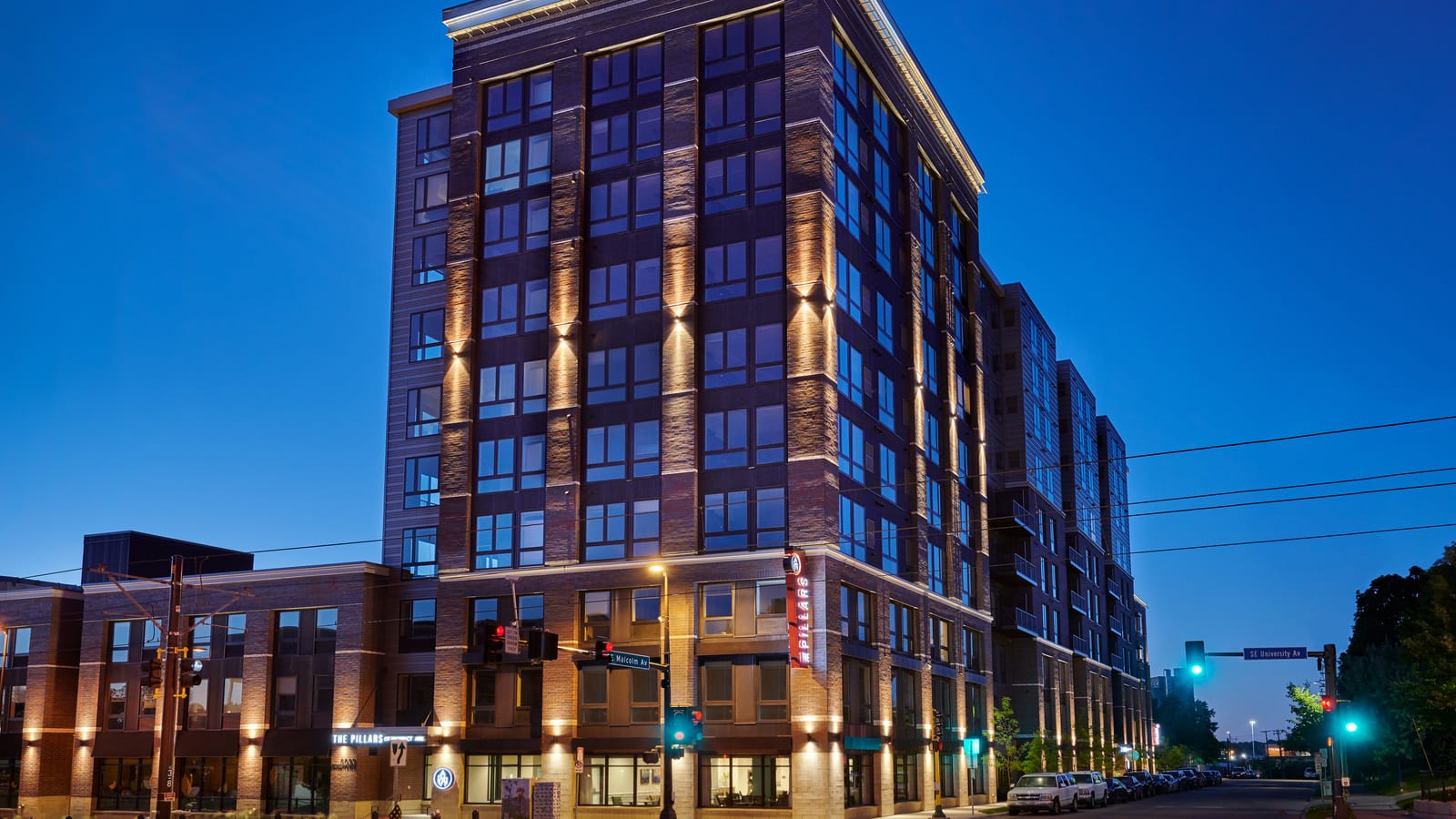
Lasell Village at Lasell University, Mirabella at ASU, and The Pillars of Prospect Park adjacent to UMN
Bringing back the village
Rekindle builds on these precedents and pushes them further. Our first project in development, a ~250-unit community in Philadelphia, combines active adult (55+) housing with general multifamily in a university-integrated setting. The program includes on-site childcare and other family-friendly amenities such as a health center, outdoor fitness and play areas, guest suites for visiting family, and generous green space. This is a modern village model—one that reflects how people have long learned, lived, and cared for one another.
Our communities will restore patterns humans relied on for thousands of years—proximity, shared space, interdependence, and lifelong learning. At the same time, they will generate mission-aligned revenue and help colleges reinvent themselves for a future of higher education that serves learners of all ages—not just those 18–24.
Encouraged by the strong demand we’re seeing from colleges, we plan to develop 10 communities over the next decade. We are actively seeking partners for our Philadelphia project as well as for future sites. If you are a university leader, operator, or investor thinking seriously about the future of campuses and communities, we invite you to connect with us at contact@rekindleprop.co.